

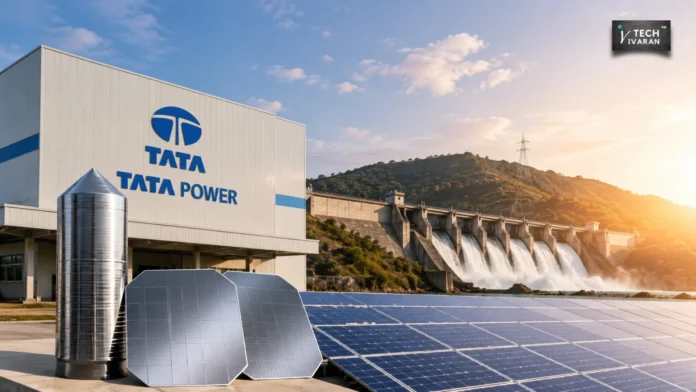
Tata Power has officially confirmed plans to establish a massive 10-gigawatt (GW) solar wafer and ingot manufacturing facility located in Odisha. This strategic expansion represents a significant commitment to bolstering India’s domestic clean energy supply chain, with construction slated to commence in October of this year.
The company aims to bring the entire facility to full operational capacity by January 2028, marking a major milestone in its industrial growth strategy.
Strategic Development of the Odisha Manufacturing Hub
The decision to anchor this manufacturing project in Gopalpur, Odisha, was driven by a combination of logistical advantages and financial incentives. Tata Power CEO Praveer Sinha noted that the firm already held land in the region, which was originally earmarked for a Tata Special Economic Zone (SEZ).
By utilizing this pre-existing land bank, the company significantly reduced the time required for site selection and acquisition, allowing for a faster transition into the construction phase.
Beyond land availability, the project is underpinned by a robust support package from the Odisha state government. These incentives were crucial in finalizing the investment decision, as the company evaluated various state-offered packages.
The approved incentive structure includes a 30% capital investment subsidy and a comprehensive 100% power duty waiver that will remain in effect for 20 years. Additionally, the government has committed to a subsidy of INR 2 per unit on power bills and the reimbursement of net SC/ST charges for a period of 15 years, creating a favorable economic environment for high-volume manufacturing.
Technical Scaling and Operational Roadmap
The manufacturing facility is designed to be built in two distinct phases, each contributing 5 GW of capacity to reach the final 10 GW target. This phased approach allows the company to manage capital deployment and operational scaling more effectively.
Currently, the project is in the preparatory phase, with teams actively working on securing essential environmental permits, establishing water supply infrastructure, and obtaining the necessary regulatory licenses required for large-scale industrial operations.
The production of solar wafers and ingots is a critical component of the solar energy value chain. By moving into this segment, Tata Power is deepening its vertical integration within the renewable energy sector.
Producing these components domestically reduces reliance on international supply chains and strengthens the broader Indian semiconductor and clean energy ecosystem, aligning with national goals for energy self-sufficiency.
Expanding Energy Storage Capabilities via SECI
In addition to its solar manufacturing ambitions, Tata Power is simultaneously expanding its energy storage portfolio. On July 20, the company received a Letter of Award (LoA) from the Solar Energy Corporation of India Ltd. (SECI) to supply 324 MW of power from its 1,000 MW Pumped Hydro Storage Project (PSP) located in Bhivpuri, Maharashtra.
This award was secured through a competitive, tariff-based global bidding process involving an online reverse auction.
The Bhivpuri project is expected to be commissioned by 2029 and will operate under a 40-year Pumped Storage Purchase (PSP) agreement. Utilizing a Build-Own-Operate (BOO) model, the facility is designed to provide eight hours of energy storage, ensuring a reliable power supply even during periods of peak demand.
The project will connect to the national grid via the 765/400 kV South Kalamb Central Transmission Utility (CTU) substation, further integrating the company’s storage assets into the Inter-State Transmission System (ISTS).
Market Context and Industrial Impact
Tata Power’s Odisha manufacturing plant and Maharashtra pumped hydro project highlight the company’s strategy of expanding both renewable energy manufacturing and storage infrastructure.
Backed by government incentives and long-term power supply agreements, these investments strengthen its position in India’s clean energy sector.
With construction of the Odisha facility set to begin in October, the project is expected to boost domestic solar component manufacturing and support the country’s long-term renewable energy ambitions.