
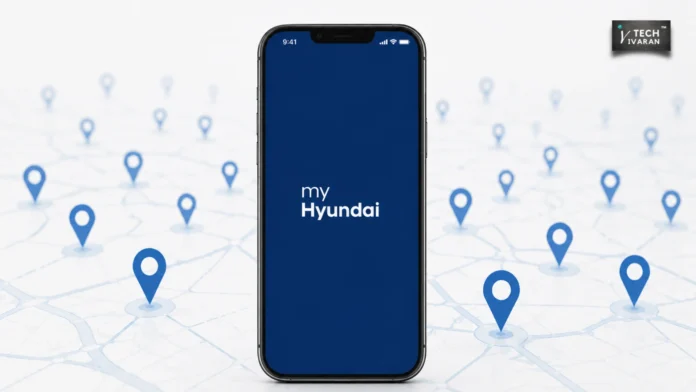
Hyundai Motor India has launched a significant expansion of its electric vehicle charging infrastructure by integrating over 30,000 charging points into the myHyundai application. This initiative establishes a unified platform designed to assist electric vehicle owners in locating, reserving, and paying for charging services across the country.
By opening this network to users of all vehicle brands, the company aims to address the primary logistical challenges currently hindering the wider adoption of electric transport in India.
Functionality of the myHyundai EV Charging Network
The myHyundai application serves as a centralized hub for managing electric vehicle charging requirements. Users can identify nearby stations, book specific time slots in advance, and complete digital payments directly through the interface.
The company reports that, on average, charging stations are positioned within a 25-kilometer radius, which is intended to provide consistent support for drivers navigating both urban environments and major national highways.
This digital infrastructure connects several critical transit corridors throughout the nation. Key routes now supported by this integrated network include paths connecting Delhi to Gurugram and Jaipur, as well as routes linking major metropolitan hubs such as Mumbai, Pune, Bengaluru, Chennai, and Goa.
These connections are designed to facilitate long-distance travel, allowing drivers to move between regions with greater confidence regarding their ability to recharge.
Infrastructure Growth and Future Charging Targets
Beyond the software integration, Hyundai Motor India is actively developing its own proprietary hardware footprint. The company currently manages 183 DC fast-charging stations across 105 cities.
These stations feature charging capacities ranging from 60 kW to 240 kW and are strategically installed at dealerships, urban centers, and along high-traffic roads to ensure rapid power delivery for various electric vehicle models.
Looking ahead, the manufacturer has outlined a roadmap to scale its dedicated DC fast-charging network to 600 stations by 2030. This projected growth is intended to more than triple the current number of proprietary locations, aligning local charging availability with international standards.
These efforts are part of a broader strategy to support the upcoming introduction of a mass-market electric SUV, which is scheduled for release within the current fiscal year.
Environmental Impact and Industry Adoption
The expansion of this charging ecosystem contributes to the company’s broader goals regarding environmental sustainability. According to internal data, the utilization of the existing charging network has already resulted in the reduction of approximately 3.5 million kilograms of carbon dioxide emissions.
By facilitating cleaner mobility options, the company aims to lower the environmental footprint associated with traditional transportation methods.
The shift toward electric mobility in India is increasingly dependent on the convenience and reliability of public charging infrastructure. As competition within the electric vehicle segment intensifies, manufacturers are prioritizing both the development of new vehicle models and the supporting systems required for daily operation.
This focus on infrastructure is viewed as a necessary step to ensure that electric vehicles remain a practical and accessible choice for a broader demographic of consumers.
By consolidating thousands of charging points into a single, brand-agnostic application, Hyundai is positioning itself to play a central role in the transition to electric mobility. This approach addresses the critical need for improved charging density, ultimately aiming to make sustainable travel a more viable reality for drivers across the country.