
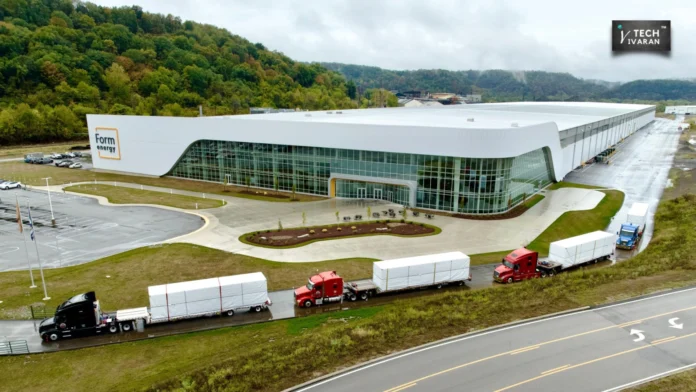
Form Energy has successfully raised $750 million in a new funding round to expand its manufacturing operations in West Virginia. This capital injection aims to scale the production of the company’s iron-air battery systems, which are designed to provide long-duration energy storage for the power grid.
Unlike standard battery technologies that typically discharge power for only a few hours, these iron-air units can deliver electricity for up to 100 hours.
The underlying chemistry relies on the oxidation and reduction of iron, essentially turning the metal into rust during discharge and reversing the process while charging. By using iron, air and water rather than the lithium, nickel and cobalt-based materials common in many conventional batteries, the company seeks to store large quantities of electricity more affordably.
Scaling Production and Supply Chain
The investment arrives as the company manages a commercial portfolio totaling more than 80 gigawatt-hours. This current volume represents a fourfold increase compared to earlier this year.
To support this growth, the organization maintains a domestic-focused supply chain, with approximately 80% of its materials sourced from the U.S. The remainder of its supply originates from Europe and Asia.
Several high-profile clients have already committed to using this technology for their infrastructure needs. Google is also backing a new data center in Minnesota that will use a 300 MW, 30 GWh iron-air battery system from Form Energy through an agreement with Xcel Energy. The battery system has been reported to be worth roughly $1 billion. Other notable customers include Xcel Energy, Crusoe, and FuturEnergy Ireland.
The broader energy storage sector is seeing increased activity as electricity demand rises, particularly from the expansion of data centers. BloombergNEF projects that U.S. data centers could account for around 20% of the country’s electricity consumption by 2035, up from about 5.9% today.
T. Rowe Price led the latest funding round, which also included participation from a wide array of investors such as Sequoia Capital, Breakthrough Energy Ventures, and GE Vernova.