
Despite being a secular nation, India has deep-rooted traditions. The foundation of Indian culture is the merging of many spiritual traditions. No matter their religion, individuals frequently offer flowers and many more to their deities every day. Due to this, flower waste has increased to 800 million metric tones per year and is now flowing into canals, harming mighty rivers.
Behind the Start
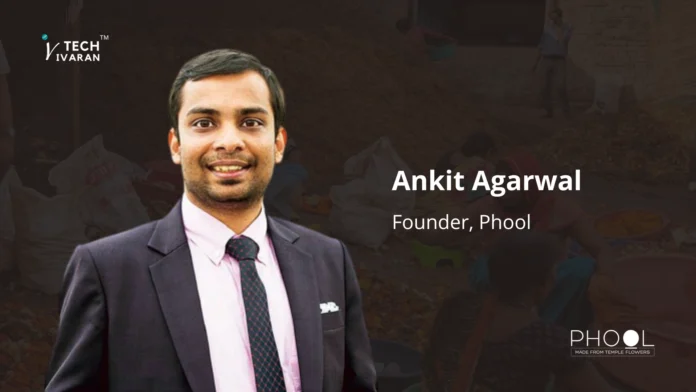
A firm named “Phool” emerged with the idea of “Flower cycling” to solve this problem. Ankit Agarwal, Founder, and CEO, launched the initiative in 2017 with Uttar Pradesh as its center of operations. They developed techniques to turn garbage from temples into biodegradable packaging and leather.
As per the statistics, they have recycled 11,000 tonnes of flowers thus far and have gathered 8.4 tonnes of floral trash from temples in Uttar Pradesh. Through a process called the flower cycle, the sacred flowers of this place are converted into organic products.
All of the goods are made by women to empower them and provide full-time employment opportunities, with a total of 73 so far.
To experience the aroma, this company launched organic/natural therapeutic charcoal-free incense sticks and cones that had numerous types based on flavors and sizes. With this, the company makes organic havan samagri, essential oils, and wellness packs that have good benefits to use.
Key Points
- Under this imitative, 11060 metric tons of temple waste have been recycled.
- And 110 metric tons of chemical pesticides have avoided entering rivers.
- Through this, 365 gas-dependent families that earn a steady income have benefited.
- Through this, 73 women gained employment opportunities earning 7000/month.
- Phool collects flowers directly from the river to make vermicompost known as “mitti” and intends to collect flowers directly from temples thereafter.
Future Plans
The phool company is currently active in four Uttar Pradesh cities. They had a goal to extend to Nepal and Bangladesh. This project intends to empower 5100 women and recycle 51 tonnes of temple waste daily.
Along with this, the development of new products—including biodegradable and alternatives to Styrofoam—is underway to expand across the country.