

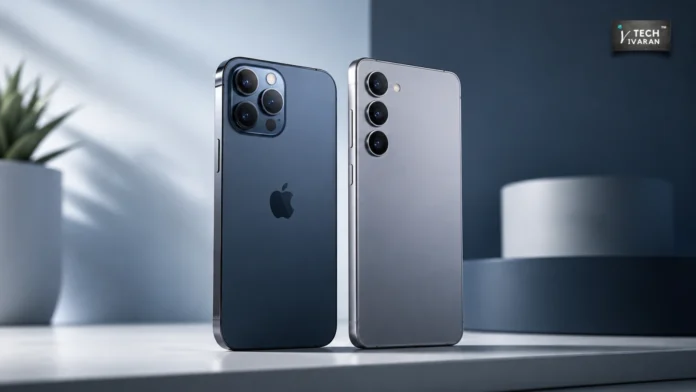
The smartphone industry is undergoing a fundamental shift in how consumers acquire hardware, moving away from traditional outright sales toward leasing and subscription-based models.
Apple recently launched an upgrade program in the United States in partnership with Klarna, allowing users to lease iPhones, Macs, iPads, and Apple Watches for a monthly fee. The program allows users to return, purchase, or upgrade their devices at the end of the lease term.
Samsung has adopted a similar approach in India through its Galaxy Forever program, which combines financing with guaranteed buyback terms. The model offers customers a more predictable way to upgrade to flagship Galaxy smartphones while remaining within Samsung’s ecosystem.
Lengthening Replacement Cycles
This strategic pivot comes as the global smartphone market faces a trend of lengthening replacement cycles. According to Counterpoint Research, the average global replacement cycle is projected to reach four years by 2026, up from 3.5 years in 2025.
In the United States, data from IDC indicates that premium smartphone owners are now holding onto their devices for an average of 42 months, a notable increase from the 38 to 40-month window seen in previous years.
Rising component costs, including memory, have pushed up prices, while incremental hardware improvements have made older devices viable for longer. This trend has reduced the frequency of new sales and limited the flow of handsets into the refurbished market.
During a recent earnings call, CEO Tim Cook said the upgrade initiative is designed to simplify access to the latest Apple devices for customers who prefer frequent hardware upgrades. He also noted that Apple’s strong resale values support this leasing model.
The Economics of Upgrading
For frequent upgraders, these programs can be cost-competitive compared to buying a device outright and trading it in later. This is particularly true for high-storage models where standard trade-in values may not fully account for the initial purchase price.
According to Counterpoint Research, the primary objective for these brands is to increase customer lifetime value by improving retention and securing a steady pipeline of trade-in devices for certified refurbishment.
Navkendar Singh, associate vice president of devices research at IDC, said the primary objective is to protect margins and improve customer retention as pricing pressure increases. Rather than simply trying to get consumers to replace their phones more often, brands are increasingly trying to turn costly smartphone purchases into predictable monthly payments.
In the U.S., carrier financing has long been the primary tool for affordability, with interest-free 36-month plans and aggressive trade-ins helping Apple and Samsung maintain a combined market share of over 80 percent.
Startup Innovation and Market Coexistence
Startups are also capitalizing on this shift. In India, BytePe has gained traction by offering subscription-style plans, with over 80% of its customers choosing these over traditional financing.
Founder and CEO Jayant Jha notes that their core demographic consists of young professionals who desire premium devices without the burden of full upfront costs. Similar models have been pioneered by companies like Raylo in the UK and Grover in Germany.
Despite the rise of these alternatives, industry experts do not expect outright ownership to vanish. Mandeep Manocha, CEO of the Indian refurbishment platform Cashify, believes that leasing, subscriptions, and traditional purchases will continue to coexist.
Industry experts expect leasing, subscription services, and traditional ownership models to coexist as consumers continue choosing different ways to upgrade their devices. In the United States, IDC’s Nabila Popal believes Apple’s program is likely to have a greater impact on Mac sales than on iPhone adoption, where carrier financing remains the dominant option.